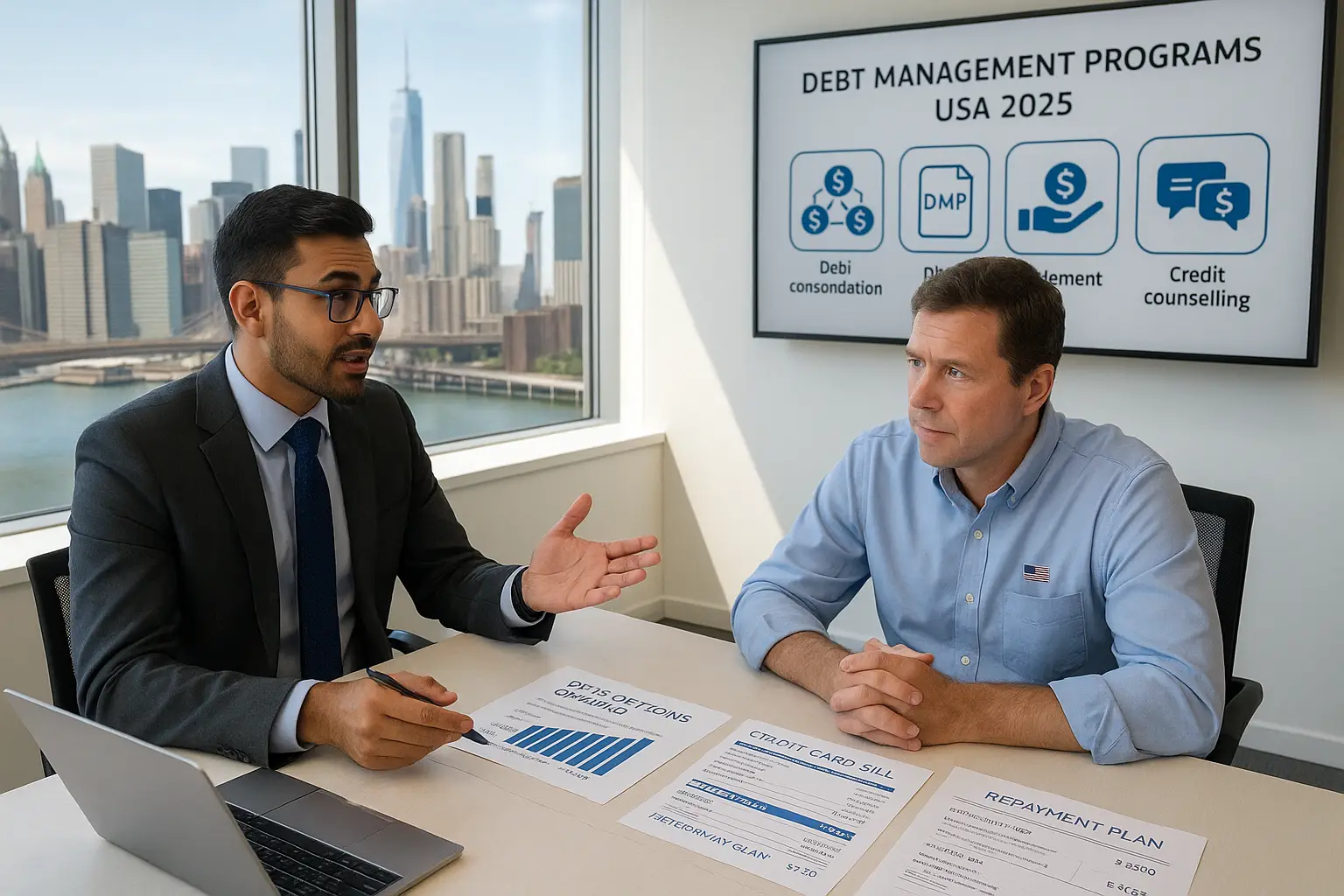
Types of Debt Management Programs in USA 2025: Complete Beginner’s Guide
Introduction: Types of Debt Management Programs in USA 2025
Debt is something most Americans face today — from credit cards to student loans. If you’re struggling to keep up with payments, you’re not alone. The good news? There are several types of debt management programs in USA 2025 that can help you take control of your money.
In this guide, we’ll break it down in simple, friendly language. No confusing terms — just clear explanations, examples, and practical tips to help you understand your options
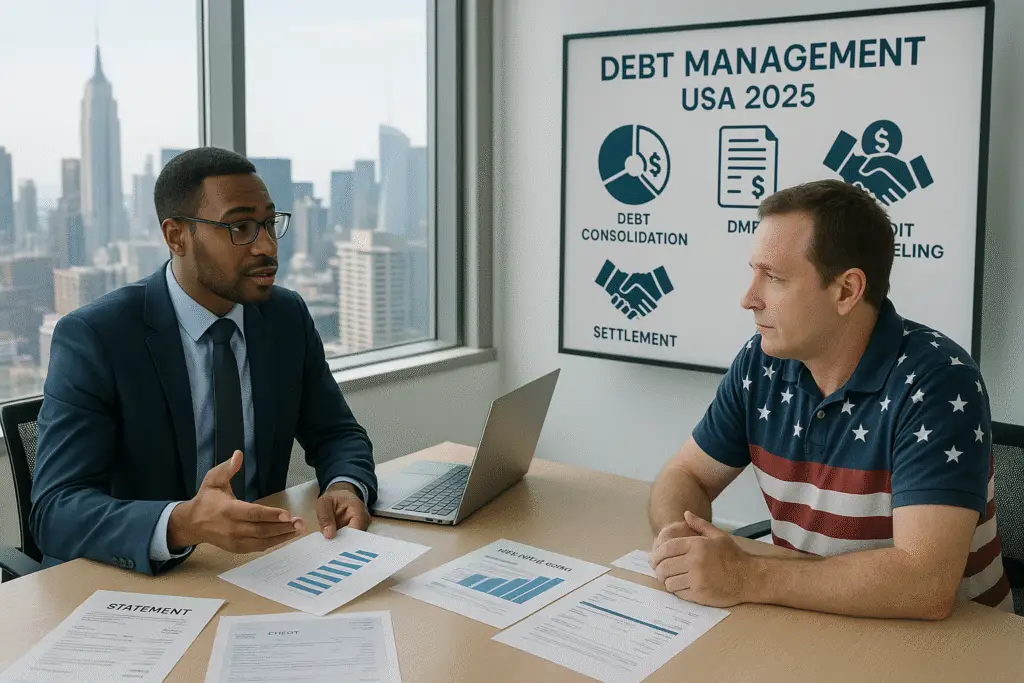
What Is a Debt Management Program?
A debt management program (DMP) is a structured plan that helps you pay off debt in a manageable way. Instead of juggling many bills, you make one monthly payment (sometimes with lower interest rates).
👉 Think of it like a GPS for your financial journey — it guides you step by step until you’re debt-free.
Why Debt Management Is Important in 2025
- Credit card interest rates are rising.
- Medical bills and student loan payments are back.
- Many households are juggling multiple types of debt.
That’s why more people are turning to debt management programs — to find relief and a clear repayment path.
Types of Debt Management Programs in USA 2025
1. Credit Counseling Programs
These are usually run by nonprofit organizations. They:
- Review your income and expenses
- Create a custom budget
- Negotiate with creditors for lower interest rates
- Combine multiple debts into one monthly payment
Example: If you owe $10,000 on credit cards, a counselor may reduce your interest and make it one $250 monthly payment.
✅ Pros: Guidance, lower interest, fewer collection calls
❌ Cons: Small fees, closed credit cards
2. Debt Management Plans (DMPs)
This is a formal repayment plan through a credit counseling agency.
- You pay the agency monthly
- They distribute payments to creditors
- Typically lasts 3–5 years
✅ Pros: Lower interest, structured timeline, reduced stress
❌ Cons: Discipline required, not all creditors may join
3. Debt Consolidation
This involves combining debts into one loan with lower interest. Options include:
- Personal loans
- Balance transfer credit cards
- Home equity loans (if you own a house)
✅ Pros: One simple payment, lower rates if you qualify
❌ Cons: Requires good credit, risk of falling into debt again
4. Debt Settlement Programs
A company negotiates with creditors so you pay less than the full amount.
✅ Pros: Can reduce total debt, faster than DMPs
❌ Cons: Hurts credit score, creditors may refuse, possible tax issues
5. DIY Debt Management
If you’re disciplined, you can manage debt yourself by:
- Creating a strict budget
- Using snowball method (paying smallest debt first)
- Using avalanche method (paying highest interest debt first)
- Calling creditors directly to negotiate
✅ Pros: No fees, full control
❌ Cons: Stressful, no professional support
Debt Consolidation vs Debt Management Programs
| Feature | Debt Consolidation | Debt Management Plan |
|---|---|---|
| Method | New loan to pay debts | Agency arranges repayment plan |
| Best For | People with good credit | People struggling with high interest |
| Impact on Credit | Neutral if payments made | Improves over time with on-time payments |
| Risk | More debt if misused | Credit cards closed, requires discipline |
Pros and Cons of Debt Management
✅ Pros
- One simple monthly payment
- Lower interest rates
- Stops collection calls
- Builds repayment discipline
❌ Cons
- Some accounts get closed
- Takes 3–5 years to finish
- Small fees may apply
- Not all debts qualify (like student loans)
Tips to Choose the Right Program
- Check if the agency is nonprofit and accredited
- Compare different options
- Watch out for companies promising “instant debt relief”
- Be honest about your income and spending
- Choose a plan you can stick with
FAQs About Debt Management in USA 2025
1. Will debt management hurt my credit?
At first, maybe. But paying consistently will improve your score over time.
2. Can I keep my credit cards during a DMP?
Usually no — most creditors require accounts to be closed.
3. How long does a debt management program last?
Normally 3–5 years, depending on debt size.
4. Is debt settlement safe?
Some are, but many are scams. Stick with trusted agencies.
5. Can I switch programs later?
Yes, but it may impact your repayment progress.
Conclusion: Types of Debt Management Programs in USA 2025
The types of debt management programs in USA 2025 give people multiple ways to handle debt — whether through counseling, DMPs, consolidation, settlement, or DIY methods.
👉 The right choice depends on your situation. If you feel overwhelmed, don’t ignore it — reach out for help. Remember, every small step counts toward financial freedom.

You May Also Like

Personal Loans – Types of Personal Loans Available in USA 2026 | Complete Guide to Personal Loan Types

Home Equity Loan: The Complete 2026 Guide for U.S. Homeowners